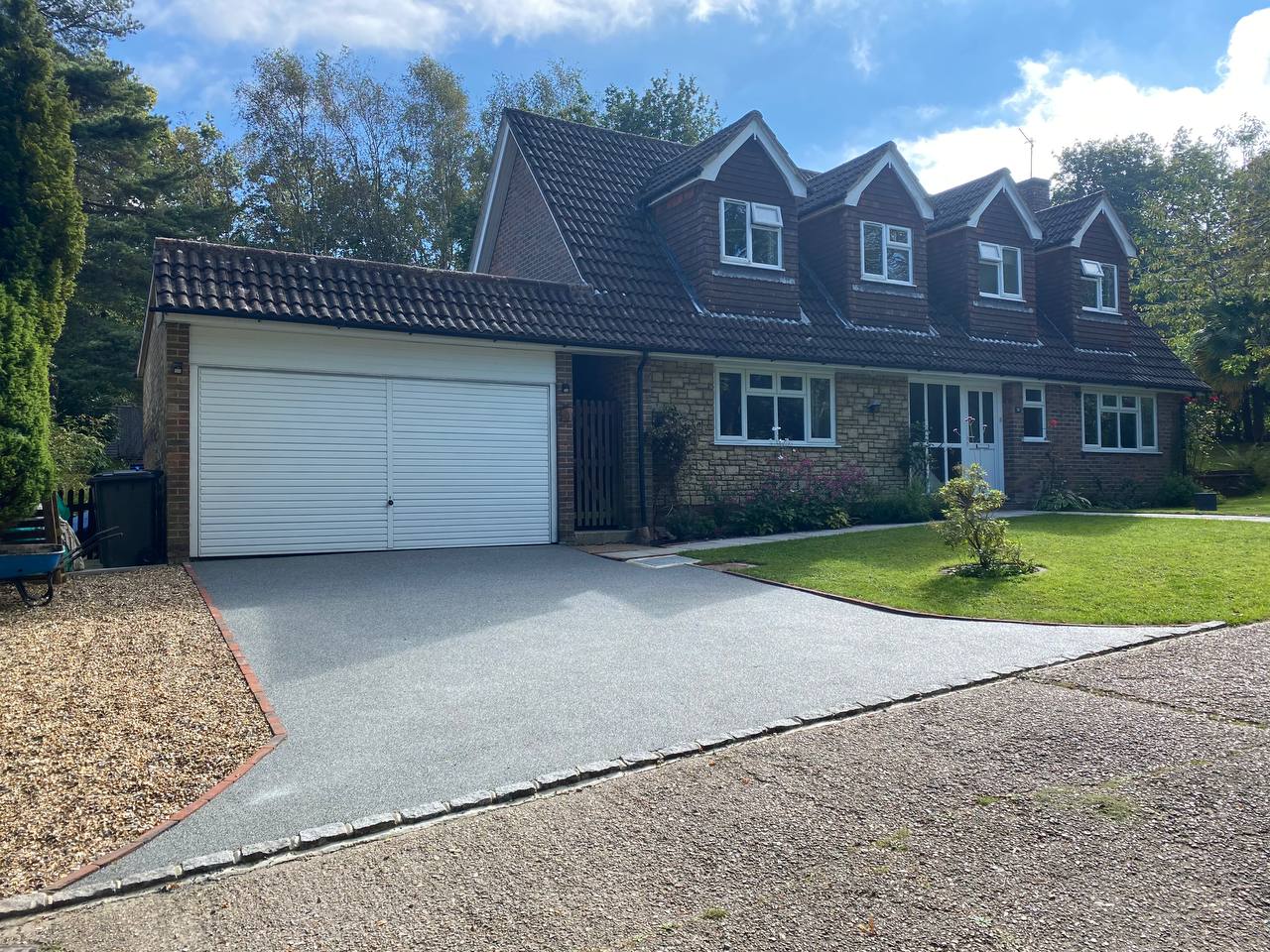
A resin driveway is valued for its smooth, attractive appearance and the wide choice of aggregate finishes available. When professionally installed and properly maintained, resin-bound surfacing can retain an impressive appearance for many years. However, like any outdoor surface, it remains exposed to traffic, organic debris and changing weather conditions, all of which can affect how the driveway looks over time.
For property owners in Belfast, Suffolk, understanding the difference between genuine discolouration and ordinary surface contamination can make maintaining a resin driveway considerably easier. Belfast Resin Driveways provides professional resin driveway installation with careful attention to preparation, materials, drainage and finishing, all of which contribute to the long-term appearance of the completed surface.
Does Resin Actually Change Colour?
Not every apparent colour change means that the resin itself has become permanently discoloured.
A resin-bound surface consists of decorative aggregate held together with resin. Dirt, algae, leaves and other contaminants can settle on or around the aggregate and make sections appear darker, greener or less vibrant.
Before assuming the driveway has permanently changed colour, it is important to establish whether the issue is:
- Surface dirt
- Organic growth
- Staining
- Uneven weathering
- Material-related discolouration
In many cases, what appears to be fading is simply contamination affecting the appearance of the surface.
1. Accumulated Dirt and General Traffic
Everyday use gradually affects appearance
Vehicles, footwear and normal outdoor activity continually introduce small amounts of dirt onto a driveway.
Fine particles can become particularly noticeable on lighter aggregate blends. High-use sections may eventually appear duller or darker than areas receiving less traffic.
Regular cleaning helps prevent this gradual accumulation from significantly changing the overall appearance of the resin surface.
2. Leaves and Organic Debris
Fallen leaves, plant material and other garden debris should not be allowed to remain on a resin driveway unnecessarily.
When organic material stays damp for extended periods, it can leave staining or encourage biological growth underneath.
Regularly removing:
- Leaves
- Twigs
- Grass cuttings
- Soil
- Plant debris
helps keep the surface clean while preventing decomposing material from affecting its appearance.
3. Moss and Algae Growth
Shaded and damp sections can require more attention
Resin-bound driveways are designed to provide a permeable surface when installed as part of a suitable system, but the surface can still become damp during wet conditions.
Sections that receive limited sunlight may remain wet for longer, creating favourable conditions for algae or moss to develop.
This can result in green or dark patches that make the driveway appear discoloured.
Keeping the surface free from organic debris and arranging appropriate cleaning when required can help maintain its original appearance.
4. Vehicle-Related Marks
Vehicles can occasionally introduce substances that leave noticeable marks on a driveway.
These may include:
- Dirt transferred from tyres
- Mud
- Road grime
- Fluids from vehicles
Marks should ideally be addressed reasonably quickly rather than being left to settle into the surface.
The correct cleaning method will depend on the type of contamination, so aggressive chemicals should not automatically be used on persistent stains.
5. Improper Cleaning Methods
Excessive cleaning can sometimes create problems
Cleaning is important, but unsuitable methods can negatively affect the appearance of a resin driveway.
Problems can occur when homeowners use:
- Harsh cleaning chemicals
- Unsuitable solvents
- Excessively aggressive pressure washing
- Abrasive cleaning techniques
A resin surface should be cleaned using methods appropriate for the material.
When using pressure-cleaning equipment, care is particularly important to avoid unnecessarily concentrating powerful jets on individual sections of the surface.
6. UV Exposure and Resin Quality
Material selection matters
Resin driveways are exposed to sunlight throughout their service life. The type and quality of resin used during installation can therefore have an important influence on long-term colour stability.
UV-stable resin systems are commonly selected where maintaining the appearance of decorative aggregate is important.
Using suitable materials from the beginning helps minimise unwanted colour changes and ensures the chosen aggregate retains its intended visual character more effectively.
This is one reason why the specification of a resin driveway matters just as much as its initial appearance.
7. Uneven Exposure to Sunlight
Different areas of the same driveway may experience different environmental conditions.
For example, one section might remain shaded for much of the day while another receives considerably more direct sunlight. Similarly, one area may remain wetter because it is positioned beneath surrounding vegetation.
These differences can cause surfaces to weather or become contaminated at different rates, creating apparent variations in colour.
The issue may therefore relate to the driveway’s surroundings rather than the resin itself.
8. Poor Drainage Around the Driveway
Persistent moisture can affect appearance
A properly designed resin-bound driveway should form part of an effective drainage arrangement.
Where water consistently collects around certain areas because of surrounding levels or unsuitable groundwork, sections may remain damp for extended periods.
Persistent moisture can encourage:
- Algae
- Moss
- Surface contamination
- Darkened areas
Correct preparation and drainage considerations during installation are therefore essential for both the performance and appearance of the finished driveway.
9. Contamination During Installation
The final appearance of a resin driveway depends heavily on careful installation.
The aggregate and resin must be handled correctly, mixed consistently and installed under suitable conditions. Contamination or inconsistencies during the process can affect the uniformity of the finished surface.
Professional installation should focus on achieving:
- Consistent mixing
- Suitable material proportions
- Even application
- Appropriate surface preparation
- A uniform finished appearance
Attention to these details helps prevent avoidable variations across the driveway.
How Can You Keep a Resin Driveway Looking Its Best?
Resin driveways are relatively straightforward to maintain, but low maintenance should not be confused with no maintenance.
A simple routine can make a significant difference.
Homeowners should consider:
- Sweeping away leaves and loose debris regularly
- Removing mud before it becomes heavily embedded
- Addressing spills promptly
- Preventing excessive organic material from accumulating
- Cleaning algae or moss appropriately when required
- Avoiding unsuitable chemicals
Regular light maintenance is generally preferable to waiting until significant contamination has accumulated.
Can a Discoloured Resin Driveway Be Restored?
This depends entirely on why the colour has changed.
If the issue is caused by surface dirt, organic growth or other removable contamination, suitable cleaning may considerably improve the appearance.
If the problem relates to the materials, installation or permanent staining, cleaning alone may not provide the same result.
The first step should therefore be identifying the cause rather than repeatedly applying cleaning products without knowing what has affected the surface.
Why Professional Resin Installation Matters
A resin driveway’s long-term appearance is strongly influenced by how it was constructed.
Professional installation considers much more than simply spreading resin and aggregate across an existing area. Preparation, base condition, drainage, material selection, mixing and application all influence the finished result.
At Belfast Resin Driveways, careful attention is given to every stage of resin driveway installation so the completed surface provides an attractive, consistent and durable finish suitable for regular use.
Resin Driveways in Belfast, Suffolk
For homeowners in Belfast, Suffolk, resin surfacing can provide an attractive solution for transforming an existing driveway or creating a completely new surface.
Choosing an experienced installer helps ensure the correct preparation and installation methods are used from the outset. This provides a stronger foundation for maintaining the driveway’s appearance and performance over the years that follow.
Belfast Resin Driveways provides professionally installed resin-bound surfaces with an emphasis on careful preparation, quality workmanship and a high standard of finish.
Conclusion
Discolouration on a resin driveway can have several causes, including accumulated dirt, leaves, algae, vehicle-related contamination, inappropriate cleaning methods and differences in environmental exposure. In some situations, what appears to be permanent fading may simply be contamination covering the decorative aggregate.
Good installation and sensible ongoing maintenance are therefore both important. Using suitable materials, preparing the surface correctly and keeping the finished driveway reasonably clean can all help preserve its appearance.
If you are considering a new resin driveway in Belfast, Suffolk, contact Belfast Resin Driveways. We can provide professional advice and a carefully installed resin surface designed to deliver an attractive, practical and long-lasting addition to your property.
Call us on: 028 9694 3884
Click here to find out more about Belfast Resin Driveways
Click here to complete our contact form and see how we can help with your driveways.